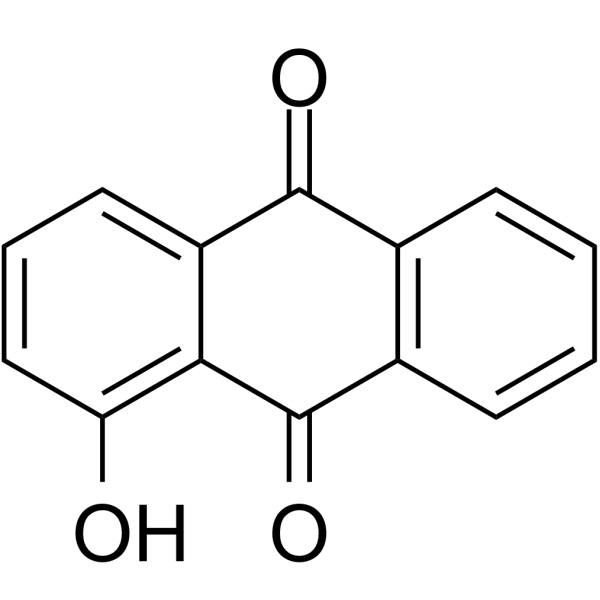
[CAS NO. 129-43-1] 1-Hydroxyanthraquinone
PRODUCTS SPECIFICATIONS [129-43-1]

DESCRIPTION [129-43-1]
Overview
| MDL | - |
|---|---|
| Molecular Weight | 224.21 |
| Molecular Formula | C14H8O3 |
| SMILES | O=C(C1=C2C=CC=C1)C3=CC=CC(O)=C3C2=O |
Summary
1-Hydroxyanthraquinone, a naturally occurring compound with oral activity from some plants like Tabebuia avellanedae , exhibits carcinogenic effect [1] .
In Vivo
1-Hydroxyanthraquinone (HA) generates strong DNA repair response and is carcinogenic in rats [1] .
MCE has not independently confirmed the accuracy of these methods. They are for reference only.
| Animal Model: | Thirty rats [1] . |
| Dosage: | 1% HA in diet. |
| Administration: | Diet. |
| Result: |
Associated with decreased weight gain which was particularly marked towards the termination of experiment.
One of the 30 rats in group 1 (experimental group) died of pneumonia 243 days after the start of experiment. A second rat died in an unnourished state at day 280, demonstrating a large tumor in the colon. Seven animals of the group died spontaneously or were sacrificed upon becoming moribund between 335 and 462 days. A total of 21 rats of group 1 survived until the end of experiment (mean value of total intake of HA/rat was 76.8 g). |
Appearance
Solid
Source
Shipping
Room temperature in continental US; may vary elsewhere.
Storage
| Powder | -20°C | 3 years |
|---|---|---|
| 4°C | 2 years | |
| In solvent | -80°C | 6 months |
| -20°C | 1 month |
Solvent & Solubility
DMSO : 16.67 mg/mL ( 74.35 mM ; Need ultrasonic)
Stock Solutions
| Concentration Solvent Mass | 1 mg | 5 mg | 10 mg |
|---|
| 1 mM | 4.4601 mL | 22.3005 mL | 44.6010 mL |
| 5 mM | 0.8920 mL | 4.4601 mL | 8.9202 mL |
| 10 mM | 0.4460 mL | 2.2301 mL | 4.4601 mL |
Synonyms